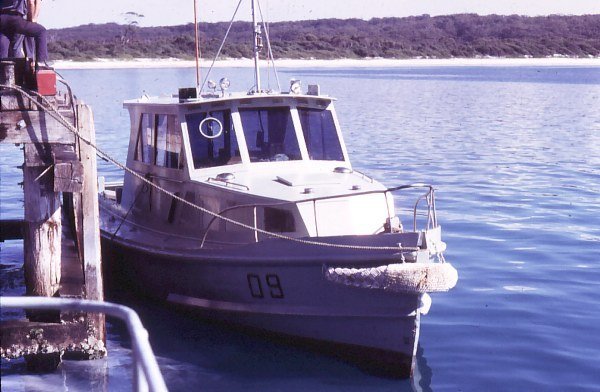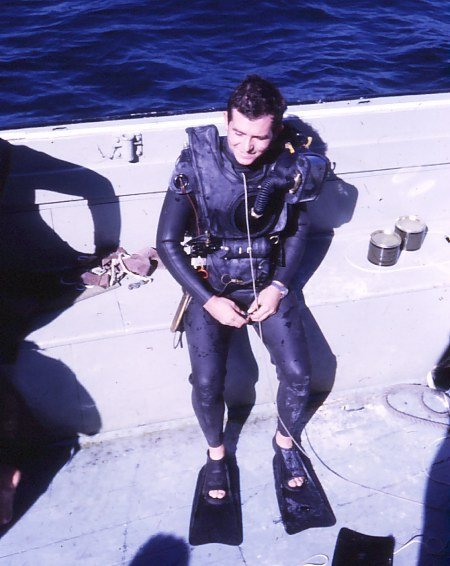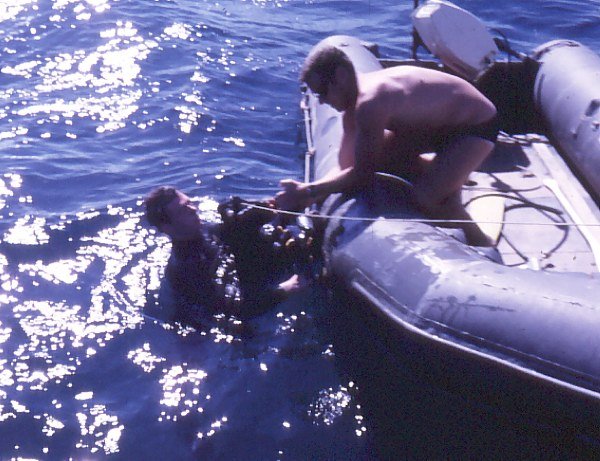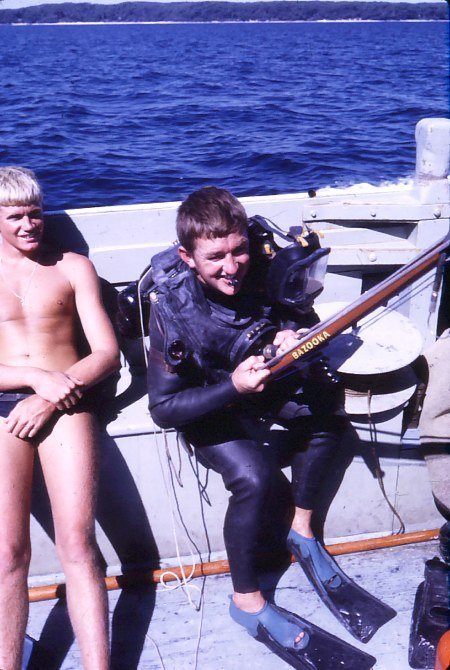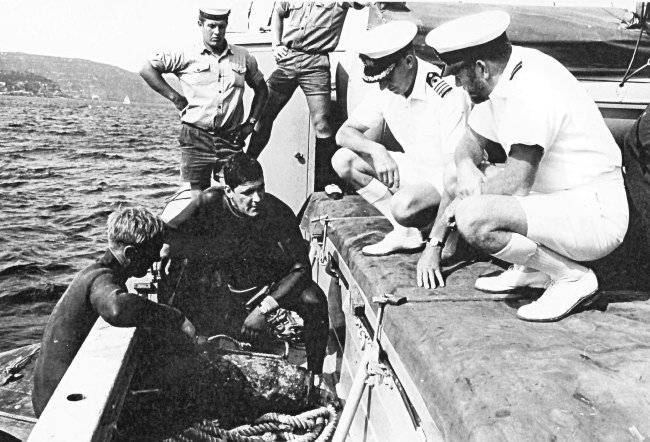


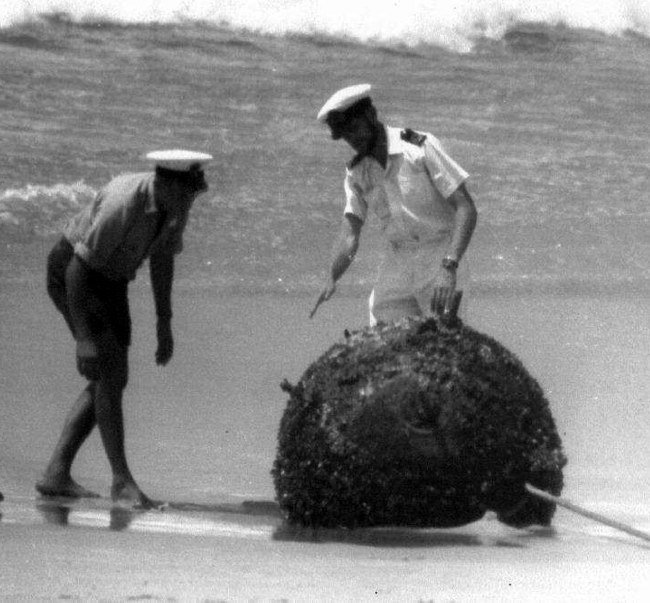
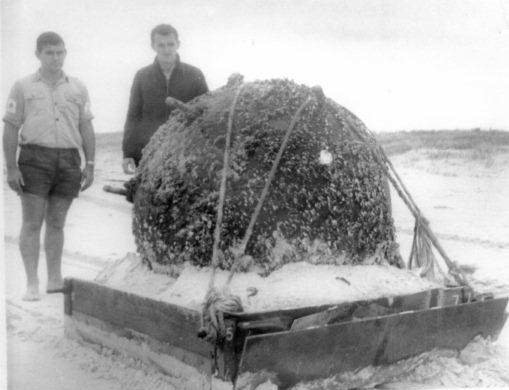
 CDT2 disposing of German GY*(660 pounds of Heximite) mine washed up on beach at Surfers Paradise 1966 CPOCD John Dollar & Lt. Tom Parker





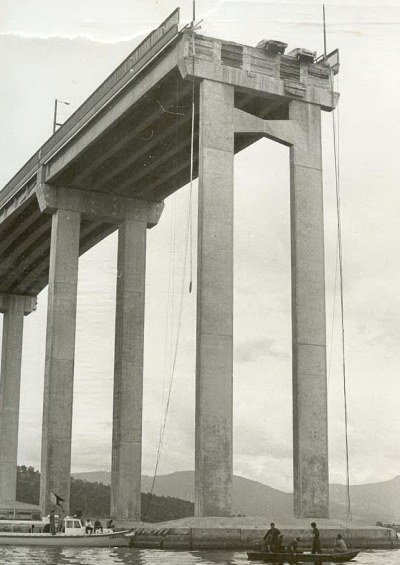
TASMAN BRIDGE DISASTER.
Navy divers search for cars, bodies.
Courtesy of Navy News. Darwin Edition. January 17, 1975.
(Eric McKenzie. Ex CPOCD)
“NAVY Clearance Divers from HMAS PENGUIN and HMAS WATERHEN were rushed by air from Sydney to Hobart to assist police in the Derwent River search below the shattered Tasman Bridge.
The 11,200-ton bulk carrier LAKE ILLAWARRA sank on January 5 after striking bridge pylons, bringing down three huge spans of concrete weighing up to 400 tons each.
The death toll at the time of going to press was nine which included crew members of the LAKE ILLAWARRA and occupants of the cars which toppled from the bridge.
The ship settled in 110 feet of water, parallel to the bridge and surrounded by jagged concrete slabs.
Officer in Charge of the Diving Team operations in Hobart, LEUT Alec Donald, described water conditions in the Derwent as “appalling”.
Divers faced the hazard of strong river currents, the jagged bridge concrete sections and exposed steel reinforcing.
Visibility was reduced to almost nil with oil spilling into the Derwent from the sunken carrier.
LCDR Bob Sutton, Fleet Mine Countermeasure and Clearance Diving Officer in Sydney, received a call for urgent assistance on January 6, the morning following the bridge collapse.
“A CD Team of three officers and 11 sailors were sent from Sydney, arriving at Hobart at 0730 that day.” He said. They carried out preliminary survey work. “As a result a further 2 sailors and extra equipment were sent there. They carried out nine dives to see what was there. Nothing was found of interest on this first day, Monday.
The following day, 11 dives were carried out. Two cars at the western end of the break in the bridge were located and recovered.”
In the days following, team members worked in a hole 30 to 40 meters deep. Visibility varied from nil to five feet.
Tides were keeping the diving down to six hours a day.” The tide is running at about two knots for the rest of the time.” LCDR Sutton said.
The divers found another car on January 8 but stopped operations soon after for the day after conditions became hazardous. Strong winds were blowing rubble and sheet iron from the bridge into the river.
LEUT Donald expected the team to be in Hobart for about two weeks, combing a river-bed area of 400 feet by 100 feet. Because of the depth, divers were able to spend only a half hour each in the water at a time. He said bridge rubble littered the river bed. Divers reported that some pieces of masonry had speared into the river leaving underwater craters 25 feet in depth and up to 15 feet in diameter.”


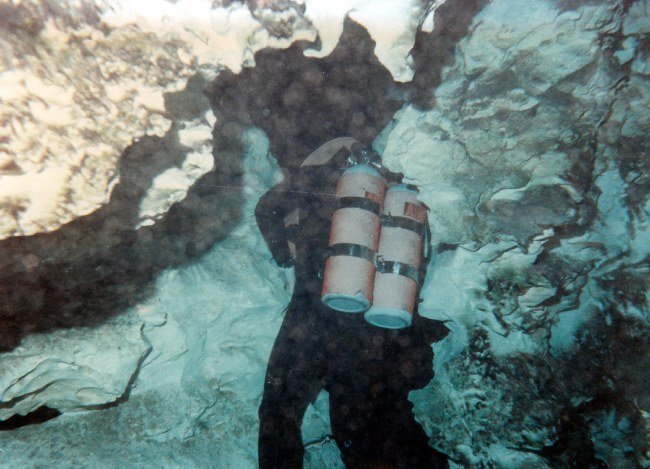
“KILSBYS HOLE – (Kilsby Sinkhole; Kilsby Cave).
This spectacular waterfilled “cenote”-style sinkhole was a very popular cave diving site in the early 1960s. It was reportedly named after the property owner, Mr. Dene F. A. Kilsby by members of the Underwater Research Group of South Australia sometime prior to April 1962, when Bob Sexton first mentioned the feature in a Cave Exploration Group (South Australia) trip report.
The sinkhole is basically a single huge cavern approximately 50 metres long by 20 metres high in most areas, and despite numerous tales and rumours of awesome depths far in excess of 100 metres, the deepest known area in the sinkhole is in fact about 63 metres, in a silty and restrictive cavity behind a large boulder collapse-mound.
In 1969 it sadly gained notoriety after two inexperienced divers drowned here in what was to be the first of a series of cave diving accidents in the Mount Gambier region which, in total, would claim the lives of 11 people during the next 5 years.
*Source: Lower South East Cave Reference Book (ISBN 0 9594383 9 4) by Peter Horne, Aug 1993.
The Task
Lead by Vic Justice In 1973 and Mick Lynch in 1974, CDT2 were required to assist government scientists in weapons trials. The task involved setting up a film studio style environment to film and recover the trialed equipment, which in most cases meant diving to the cave floor.”
Alan Smith
 Kilsby Sinkhole - Mt. Gambier.